

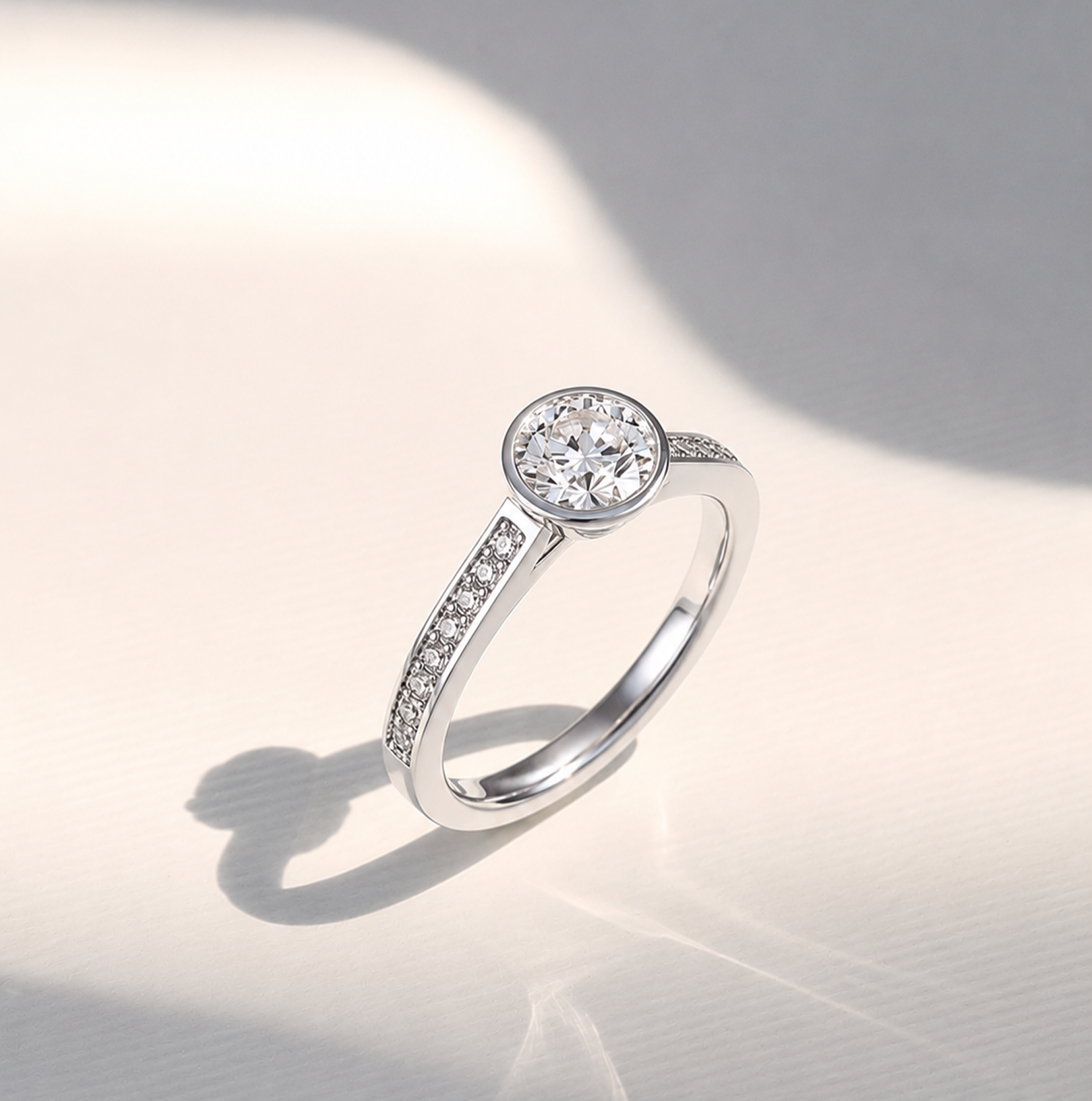
A Diamond’s First Impression: Why Shape Changes Emotion
A diamond is understood first by the eye, before its carat weight, clarity or proportions are ever considered. Its outline creates an immediate impression: composed or expressive, architectural or soft, familiar or unexpected. Shape is not simply a technical characteristic, it is the first gesture a diamond makes.
GIA distinguishes shape from cut style: shape describes the stone’s outline, while cut style refers to the arrangement of its facets. That distinction matters because two diamonds may share similar brilliance yet communicate something entirely different through silhouette alone.
The Character of a Silhouette
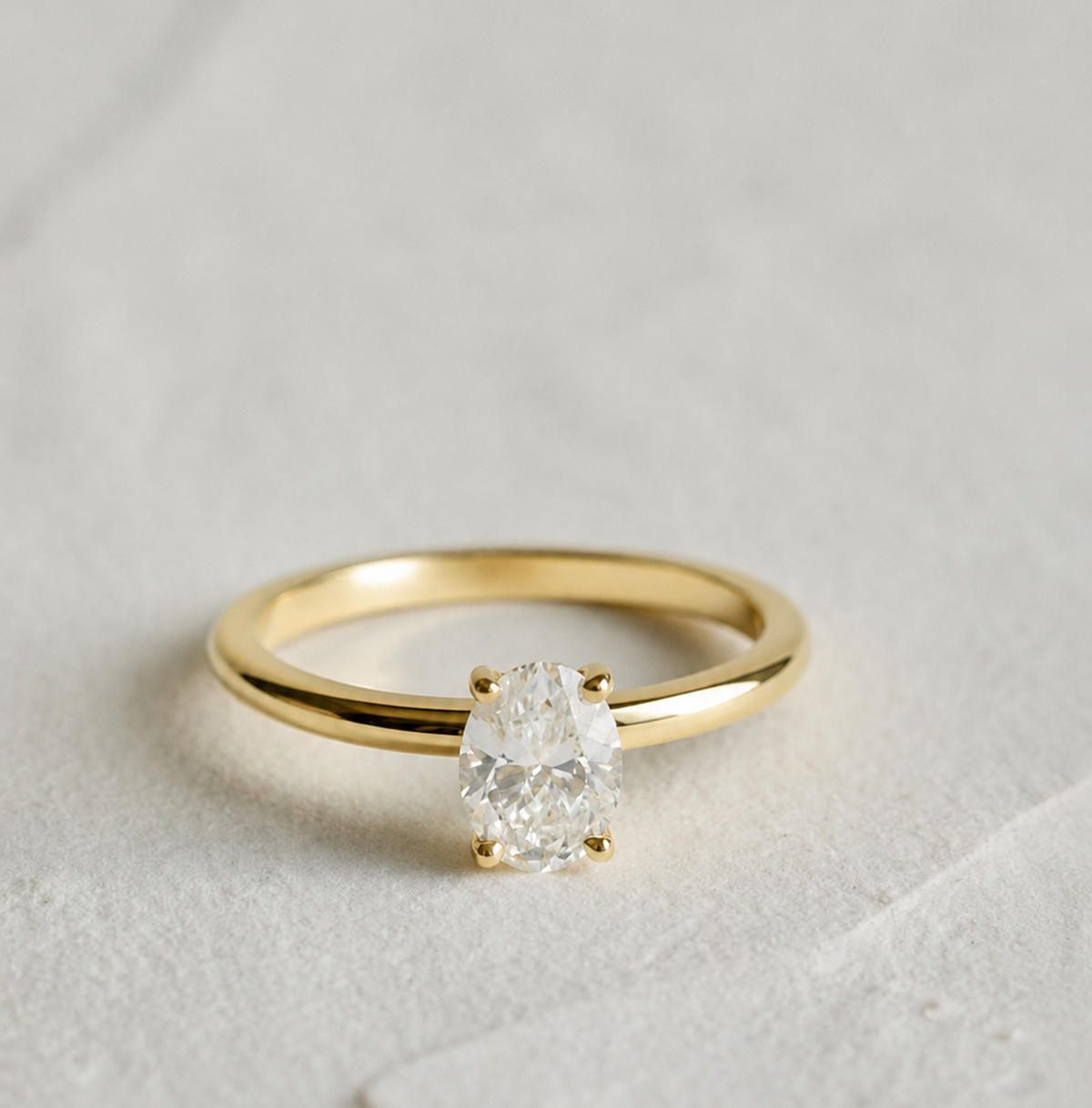
The round brilliant carries a sense of completeness and equilibrium, its symmetry giving it an enduring familiarity. Elongated forms such as oval and marquise introduce movement, while the pear shape brings asymmetry and a more expressive line. Step-cut forms, particularly the emerald cut, create another mood altogether: broader flashes of light, cleaner geometry and a character often perceived as more restrained.
These impressions are not rules. They are part of the visual language of proportion. GIA’s research into fancy-shaped diamonds similarly acknowledges that outline and face-up pattern play an important role in how different stones are perceived, with personal preference remaining central to their appeal.
Where Light Meets Form
Shape also determines the way light is organized within a diamond. Brilliant-style faceting is designed to produce brightness and sparkle, while step cuts create longer, more deliberate flashes. Even within the same family of shapes, subtle differences in length, width and proportion can alter the stone’s presence considerably.
This is why choosing a diamond cannot be reduced entirely to grading. Technical qualities establish its value and performance, but the relationship with a particular shape is often instinctive. One silhouette may feel immediately familiar, another may possess exactly the degree of distinction being sought.
A Choice That Becomes Personal
An engagement ring will be seen thousands of times over the course of a life, often long after the details of the original selection have faded from memory. The shape of its diamond becomes part of that familiarity, eventually inseparable from the hand that wears it.
Perhaps this is why shape carries such emotional weight. It is one of the few qualities of a diamond that can be understood immediately, yet remains deeply personal in its appeal. The most considered choice is not necessarily the shape that commands the most attention, but the one whose character feels entirely at home with the person for whom it was chosen.
Within Matanee’s world of Celebrating Love & Life, a diamond is never simply selected by specification. Its beauty begins in the details that give it presence, distinction and, eventually, a meaning of its own.

Leave a comment
This site is protected by hCaptcha and the hCaptcha Privacy Policy and Terms of Service apply.