

Article: Before the White Dress: How the Wedding Became a Language of Symbols
Before the White Dress: How the Wedding Became a Language of Symbols
A wedding has never been defined by a single object. Long before it became a carefully composed visual world, it was already built from signs: gestures, fabrics, flowers, rings, colors, and rituals whose meanings were understood across generations.
What makes the wedding particularly compelling is that these symbols rarely stand alone. Their significance comes from accumulation. A ring may speak of continuity, a veil of transition, a flower of remembrance or devotion, a particular color of purity, celebration, or status. Together, they create a language that is at once public and deeply personal.
When Ceremony Became Visual
Wedding traditions have changed continuously across time and place, yet one impulse has remained consistent: important commitments are given form.
The white wedding dress, for example, was not always the universal bridal ideal it later became. Its rise in nineteenth-century Europe was shaped in part by royal influence, especially after Queen Victoria’s 1840 marriage to Prince Albert, when her white gown was widely reproduced in the press and helped establish a new visual vocabulary for bridal dress.
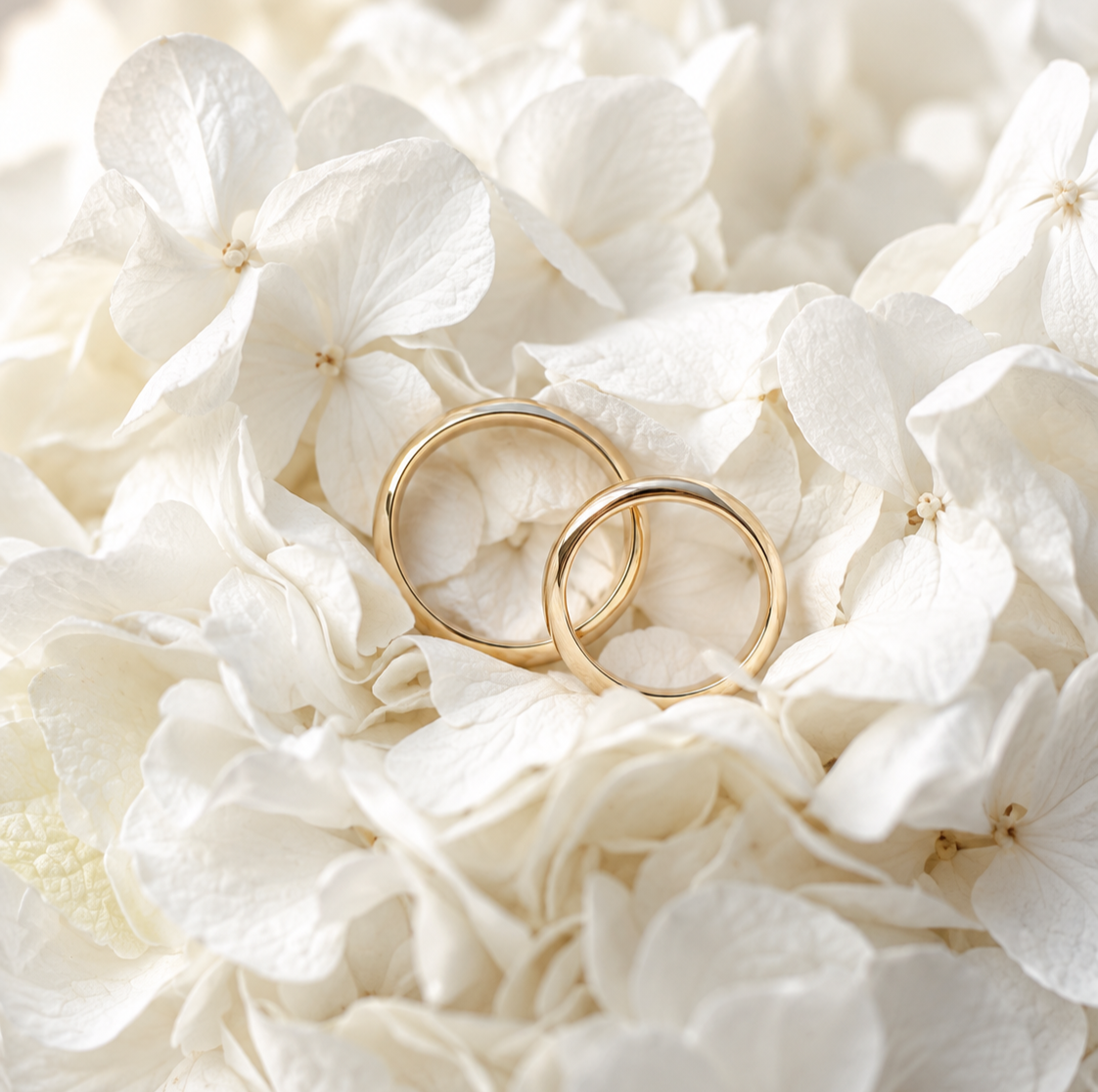
The ring followed a different trajectory, carrying older associations with commitment and continuity. Flowers, veils, ceremonial textiles and precious objects developed their own meanings alongside it, turning the wedding into an intricate composition in which almost every detail could signify more than appearance alone.
The Beauty of Shared Meaning
Symbols endure because they allow emotion to be expressed without overstatement. Their power lies in recognition: a gesture can be understood before it is explained, and an object can carry meaning beyond its material form.
This is why wedding jewelry occupies such a natural place within the ceremony. It is not simply decorative. It belongs to a larger visual language in which beauty is used to mark intention, continuity and union.
A wedding ring becomes especially significant in this context because it is one of the few ceremonial objects that continues beyond the day itself. The flowers are removed, the dress is stored, the setting disappears, the ring remains in daily life.
What Continues After the Ceremony
The most refined wedding traditions are not necessarily the most elaborate. Their strength lies in the way they connect the visible moment with something more enduring.
A ceremony may last only a few hours, but its symbols are designed to outlive it. This is what gives wedding jewelry its particular emotional gravity: it carries the language of the occasion forward, long after the ceremony has become memory.
Within Matanee’s world of Celebrating Love & Life, this continuity is central. A wedding is not only a day of beauty, but a moment in which meaning is given form, and certain objects are chosen to remain.

Leave a comment
This site is protected by hCaptcha and the hCaptcha Privacy Policy and Terms of Service apply.