

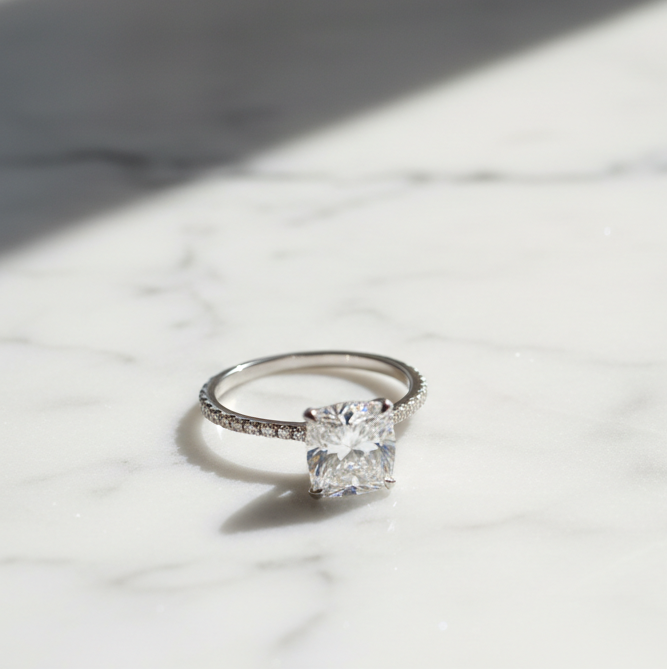
The Hidden Architecture of a Diamond Ring
In fine jewelry, beauty is only the beginning.
A diamond ring may appear effortless, yet behind its brilliance lies a hidden architecture of precision, balance and craftsmanship.
Every detail matters: the height of the setting, the strength of the prongs, the curve of the band and the way light enters the diamond. These elements are often invisible at first glance, but they define how the ring looks, feels and lasts.
Where Beauty Begins
A diamond ring is not simply a stone placed on gold. The design must respect the diamonds' shape, proportions and structure. A round brilliant, an emerald cut, or a marquise diamond each requires a different setting approach to reveal its best character.
The goal is not only to hold the diamond, but to let it shine fully.
The Art of Balance
One of the signs of fine jewelry is proportion.
The band should feel elegant, the setting should protect the stone and the ring should sit naturally on the hand.
If the prongs are too heavy, they can hide the diamond. If they are too delicate, they may not protect it enough. True craftsmanship lies in finding the perfect balance between security and grace.
Comfort as a Luxury Detail
Luxury is not only what we see. It is also what we feel.
A well-made diamond ring should be comfortable enough for everyday wear while keeping its refined presence. Its weight, inner curve and finish all influence the wearing experience.
This is what separates a beautiful jewel from a lasting one.
Made to Become an Heirloom
A diamond ring becomes timeless when it is made with both beauty and durability in mind. Strong structure, precise setting and thoughtful proportions allow the piece to be worn, preserved and passed on.
At Matanee, every diamond ring is created with attention to both visible brilliance and invisible strength.
Because true luxury is not only made to shine.
It is made to last.


Leave a comment
This site is protected by hCaptcha and the hCaptcha Privacy Policy and Terms of Service apply.