

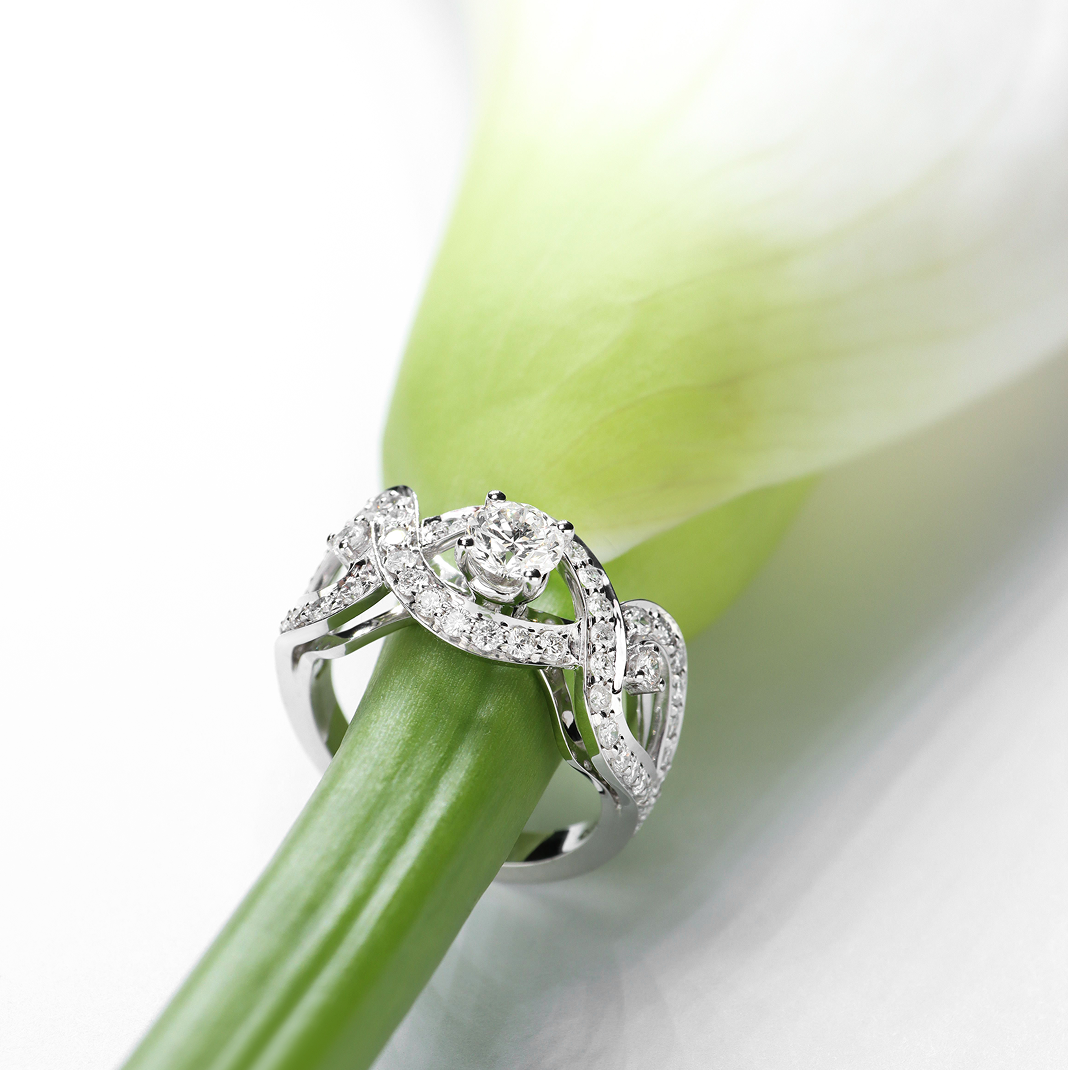
The Lost Language of Sentimental Jewelry
How jewels once carried secret messages, memory and emotion
Before jewelry became something we chose to complete an outfit, it was often used to complete a message.
A ring, a locket, or a brooch could say what words could not. It could carry affection, longing, remembrance, devotion, or grief. In certain periods of history, jewelry was not only an ornament, it was a private language worn close to the body.
This is the world of sentimental jewelry - jewels created not merely to shine, but to speak.
During the Georgian and Victorian eras, jewelry often carried hidden emotional codes. Some pieces included initials, portraits, symbolic motifs, or secret compartments. Others used gemstones themselves as letters. This was known as acrostic jewelry: a style in which the first letter of each gemstone formed a hidden word. For example, a ring spelling “REGARD” could be created with Ruby, Emerald, Garnet, Amethyst, Ruby and Diamond. GIA describes acrostic jewelry as the practice of spelling words through the first letters of gemstones, turning a jewel into a discreet personal message.
These jewels were intimate by nature. Their meaning was not always visible to everyone. A person might see only a beautiful arrangement of stones, while the wearer knew the true message behind them. This secrecy made the jewel more personal. It transformed beauty into a private conversation.
Words such as “love,” “regard,” “adore” and “dearest” became especially popular in sentimental jewels. The message was often hidden in plain sight, allowing emotion to be carried elegantly and silently. In a time when open expressions of love could be restrained by social codes, jewelry offered another way to communicate.
Lockets also played an important role in this emotional language. They could hold a miniature portrait, a tiny note, a lock of hair, or another personal token. Worn near the heart, a locket became a small private archive - a place where memory could be protected and carried throughout daily life.
Sentimental jewelry was not only connected to romance. It was also deeply linked to remembrance. In the 19th century, mourning jewelry became a meaningful way to preserve emotional connection after loss. Some mourning pieces included black enamel, pearls, inscriptions, or hairwork. The Metropolitan Museum of Art, for example, holds mid-19th-century American mourning jewelry made with gold, glass and hair, showing how personal materials could become part of a jewel’s emotional meaning.
To modern eyes, such pieces may seem unusual, even mysterious. Yet they reveal something deeply human: the desire to keep love close, even when someone is absent. Jewelry offered a tangible form to memory. It allowed emotion to become something one could touch, wear and preserve.
This is why sentimental jewelry still feels relevant today. Its forms have changed, but its essence remains. Modern jewelry may express memory through a birthstone, an engraved date, a meaningful diamond, a symbolic shape, or a custom design chosen for one person alone. The hidden message may no longer be spelled through gemstones, but the intention is the same.
A jewel becomes sentimental when it is chosen with meaning.
At Matanee, fine jewelry can be understood through this same lens. A ring, pendant, or bracelet is not only precious because of its materials. It becomes precious because of the feeling it carries. It may represent a birthday, a promise, a loved one, a new chapter, or a personal transformation. Its value is not only in what is visible, but also in what is privately understood.
The most meaningful jewels are often those that contain a secret known only to the wearer. They do not need to explain themselves. They simply remain close - quiet, intimate and unforgettable.
Because sometimes, jewelry is not made to say everything aloud. Sometimes, it is made to keep the message beautifully hidden.

Leave a comment
This site is protected by hCaptcha and the hCaptcha Privacy Policy and Terms of Service apply.