

Article: Why Diamonds Were Made for Evening Light
Why Diamonds Were Made for Evening Light
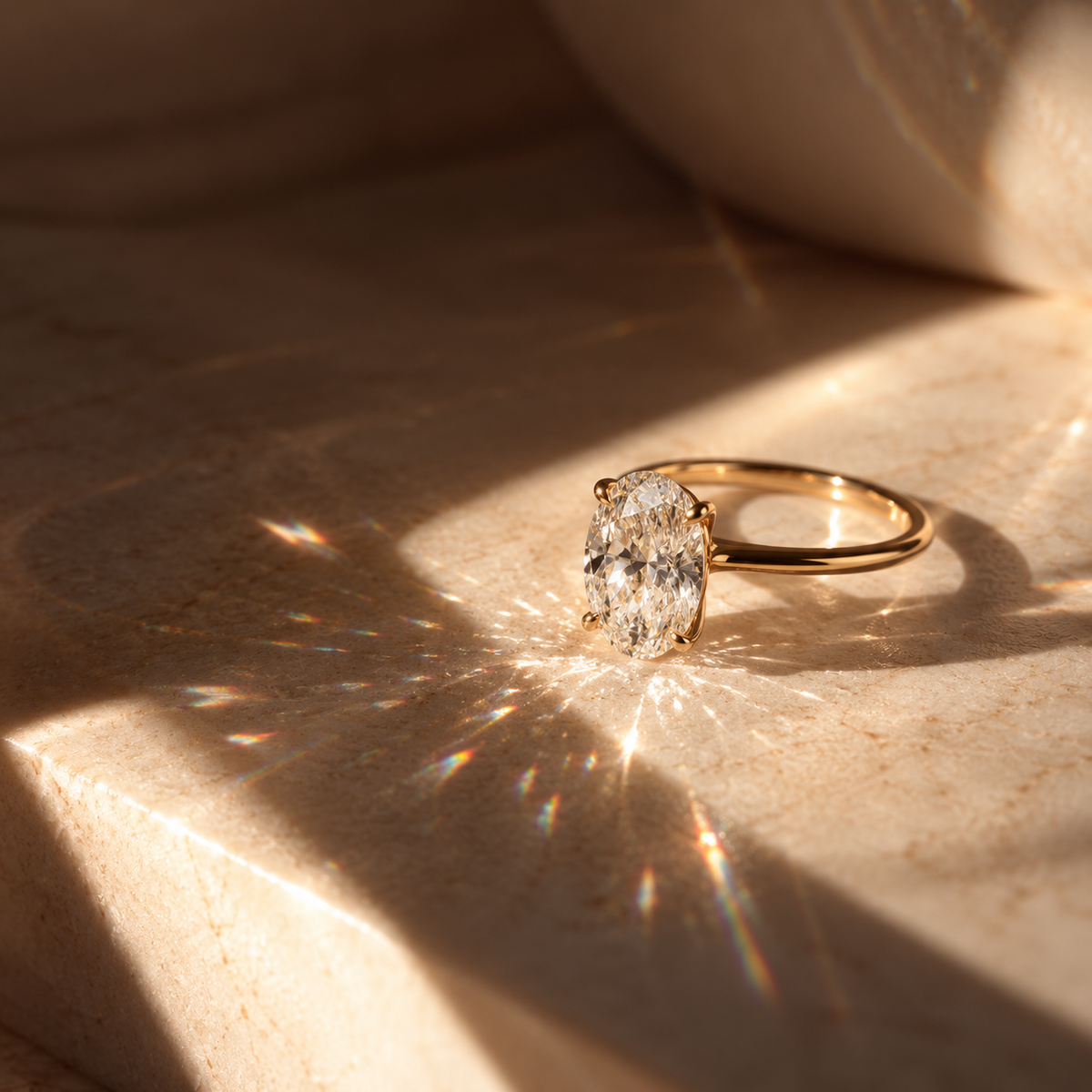
A diamond does not reveal itself all at once. Its character changes with the hour, with the room, with the quality of light that reaches it. In daylight, its brilliance can feel precise and crystalline, by evening, under warmer and more directional light, something softer appears. Fire becomes more pronounced, contrast deepens, and the stone acquires a more atmospheric presence.
This responsiveness is part of what has made diamonds so compelling for centuries. Their beauty is not static. It is created in conversation with light.
The Hour That Changes Everything
Before electric illumination transformed interiors, evenings were shaped by candlelight, oil lamps and chandeliers. Light was lower, warmer and more concentrated, and faceted stones answered to it in a particularly beautiful way. Rather than appearing uniformly bright, they caught small points of illumination and returned them in flashes, allowing movement to become part of the jewel itself.
The effect was less about spectacle than intimacy. Against darker surroundings, light seemed to gather within the stone, producing moments of brilliance that appeared and disappeared with each gesture.
This quality remains central to the experience of a diamond today. Its appearance is never entirely fixed, because the environment around it is always changing.
Where Light Finds Its Expression
The language of diamond optics is precise: brilliance describes the return of white light, fire the separation of light into spectral color, and scintillation the shifting pattern of brightness and shadow created through movement. Yet what is technical in explanation becomes almost instinctive in experience.
Under evening light, these effects take on a different character. Warm illumination creates greater contrast, movement becomes more apparent, flashes of color appear briefly, then recede. The diamond feels less exposed and more alive.
This is why a stone should never be understood under one light alone. Its full character emerges through variation.
After Daylight
There is something inherently celebratory in this transformation. Evening has always carried a different emotional register: dinners become slower, rooms more intimate, and occasions more deliberate. A diamond enters that atmosphere naturally, not as a separate object, but as part of the light itself.
Within Matanee’s world of Celebrating Love & Life, this is perhaps one of the diamond’s most beautiful qualities. Its permanence is undeniable, yet its appearance is never completely the same. It changes with the hour, with the setting, with the person wearing it.
A diamond endures, but it never stands still.

Leave a comment
This site is protected by hCaptcha and the hCaptcha Privacy Policy and Terms of Service apply.