

Diamonds Before They Sparkled
How diamond cuts transformed stone into light
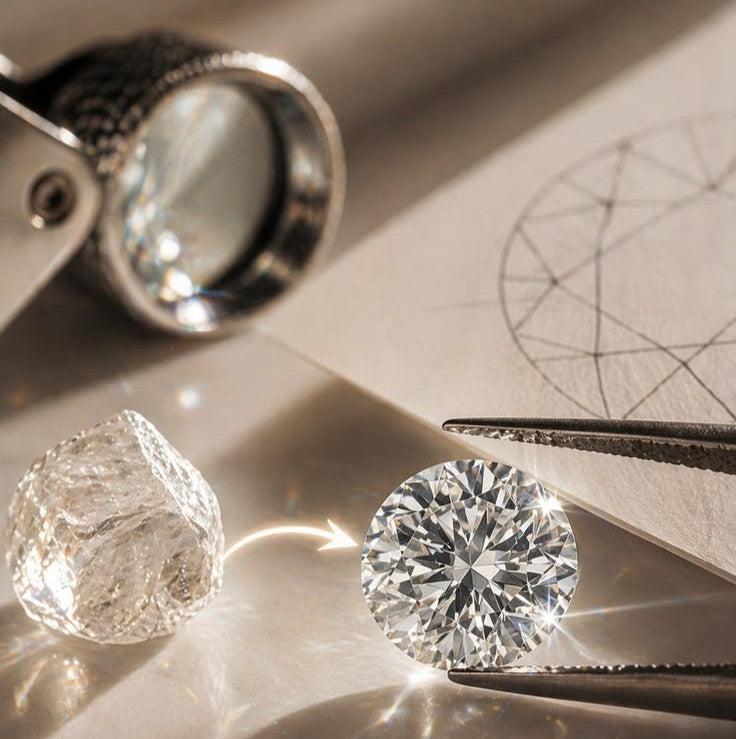
A diamond does not reveal its full beauty by chance. Its brilliance is the result of nature, craftsmanship and centuries of human curiosity. Before diamonds became the sparkling stones we recognize today, they passed through a long evolution - from mysterious natural crystals to carefully cut jewels designed to capture light.
In earlier periods, diamonds were admired in a very different way. They were not valued only for sparkle, because cutting techniques were still limited. Instead, they were appreciated for their rarity, strength and almost mythical character. A diamond’s hardness made it fascinating, while its natural form gave it a quiet and powerful beauty.
As jewelry craftsmanship developed, artisans began to understand that the appearance of a diamond could be transformed through cutting. The stone was no longer only something to be found, it became something to be revealed. Each facet opened a new possibility for light, reflection and depth.
Among the earliest and most romantic styles was the rose cut. Unlike modern brilliant diamonds, the rose cut was not created for intense sparkle. Its flat base and softly faceted dome produced a gentle glow, especially under candlelight. It had a poetic quality - subtle, intimate and slightly mysterious.
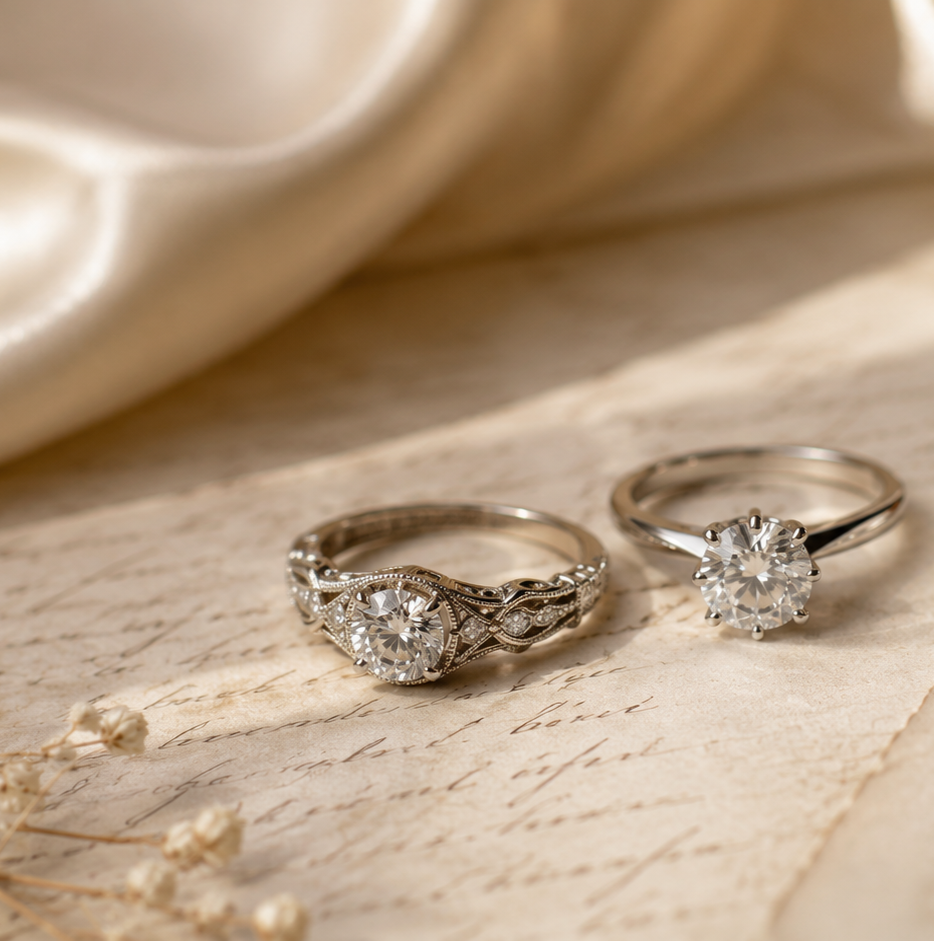
Later, antique cuts such as the old mine cut and old European cut introduced more depth and brilliance. These diamonds were often shaped by hand, which gave each stone a unique character. Their beauty was not perfectly uniform and that imperfection is precisely what makes them so charming today. They carry the trace of craftsmanship, time and individuality.
With the progress of technology and gemological knowledge, diamond cutting became more exact. The modern brilliant cut was developed to enhance light performance with greater precision. Facets, angles, symmetry and proportions became essential to how a diamond returns light to the eye.
This is why the cut of a diamond is much more than its external shape. It is the invisible architecture behind its brilliance. A well-cut diamond can appear alive with light, while a poorly cut one may seem dull even if it has impressive size or clarity.
Different cuts also create different emotions. The round brilliant remains classic and luminous. The emerald cut feels elegant, calm and structured. The oval cut brings softness and elongation. The pear shape feels romantic and artistic. The marquise cut adds drama, distinction and a sense of vintage nobility.
For this reason, choosing a diamond cut is both a technical and personal decision. It involves light, proportion and quality - but also taste, lifestyle and emotion. The right cut is the one that feels natural to the person wearing it.
At Matanee, the diamond is not seen only as a precious stone. It is seen as a meeting point between nature and design. Through expert guidance, each client can discover the cut that best reflects their elegance, personality and story.
Because a diamond’s beauty does not begin with sparkle. It begins with the art of revealing light.
Discover the diamond cut that reflects your personal light.

Leave a comment
This site is protected by hCaptcha and the hCaptcha Privacy Policy and Terms of Service apply.