

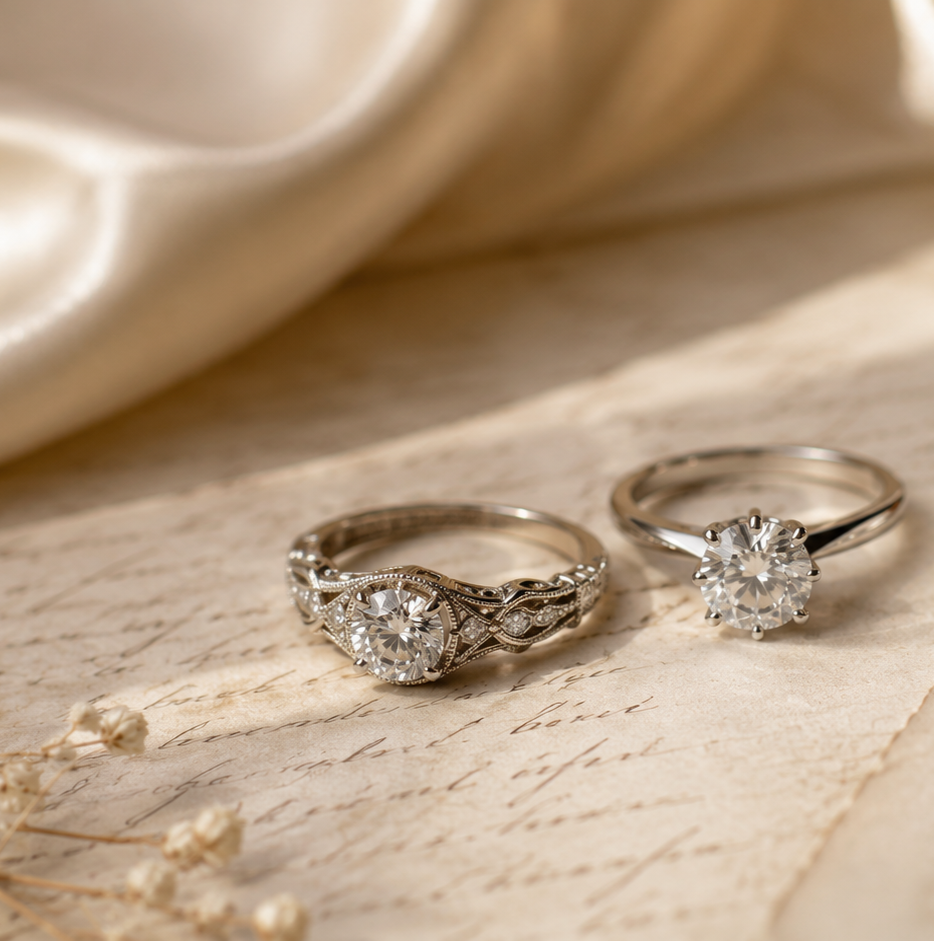
The History of Engagement Rings
A timeless symbol of love, promise and personal legacy
Some jewels are worn for beauty. Others are worn for meaning. An engagement ring belongs to the second category. It is a small object, yet it carries one of life’s most significant emotions: the decision to choose someone, to build a future and to transform love into a lasting promise.
The tradition of giving a ring as a symbol of commitment is far older than the modern diamond engagement ring. In ancient societies, rings were already associated with union, loyalty and social agreement. Their circular form, without beginning or end, naturally became a symbol of continuity. Long before diamonds were cut to reflect light, rings were already used to express attachment and permanence.
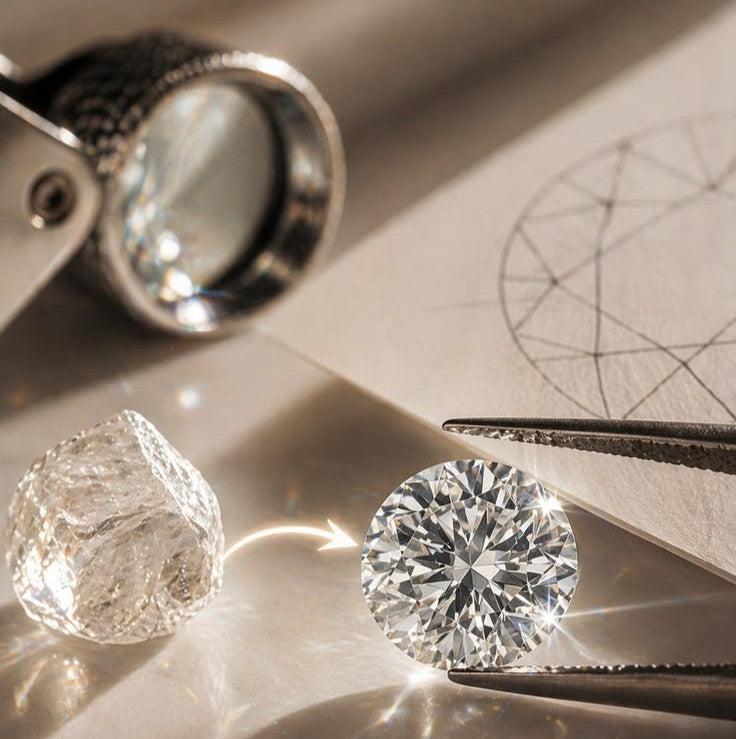
Over time, this symbolic object became more refined. The diamond gradually entered the story of engagement rings, bringing with it a new meaning. Because of its exceptional hardness and rarity, the diamond came to represent strength, endurance and a love intended to resist time. It was not only admired for its beauty, but also for what it suggested: an unbreakable bond.
The diamond engagement ring became especially meaningful in European history during the 15th century. One of the earliest recorded examples dates to 1477, when Archduke Maximilian of Austria gave Mary of Burgundy a ring set with diamonds for their betrothal. This moment helped associate diamonds with noble love, endurance and lifelong commitment. From that point, the diamond ring slowly became associated with elegance, status and romantic commitment. What was once a private promise also became a visible sign of devotion.
Yet the engagement ring has never remained fixed in one form. Each era has reinterpreted it according to its own taste. Some periods preferred ornate details, symbolic motifs and delicate craftsmanship. Others celebrated clean lines, symmetry and minimal elegance. From vintage-inspired designs to contemporary solitaires, the engagement ring has continuously evolved while preserving its essential meaning.
Today, choosing an engagement ring is no longer only about tradition. It is about identity. A round diamond may express timeless grace. An oval cut may suggest softness and modern femininity. An emerald cut may appeal to someone with a refined, architectural sense of style. A pear or marquise shape may speak to a more distinctive and expressive personality.
This is why an engagement ring should feel deeply personal. It should not simply follow a trend or imitate another story. It should reflect the person who will wear it, the relationship it represents and the future it is meant to accompany.
At Matanee, the search for an engagement ring is approached as an intimate journey. The choice of the diamond, the setting, the metal, and the proportions all contribute to the emotion of the final piece. Every detail matters, because every detail becomes part of the memory.
An engagement ring is not only the beginning of a proposal. It is the beginning of a story that will be remembered, worn and passed on.
Find the ring that turns your promise into a lasting piece of beauty.

Leave a comment
This site is protected by hCaptcha and the hCaptcha Privacy Policy and Terms of Service apply.